
Is CCNP Harder than CCNA?
Cisco’s CCNA and CCNP certifications are two of the most widely recognized and respected certifications in the field of network engineering. Both certifications are designed to test the knowledge and skills of network professionals, but they are not created equal. One of the most common questions asked by those considering Cisco certification is whether the CCNP is harder than the CCNA. In this article, we will explore the similarities and differences between the two certifications and answer the question “Is CCNP harder than CCNA”. But before answering the question let’s understand some history of Cisco certifications. The concept of Cisco certifications first came to light in 1998 when Cisco introduced beginner and professional level certifications to networking professionals. It was started to support the CCIE program, which was started in 1993. Coming to their acronyms, CCNA stands for Cisco Certified Network Associate, while CCNP stands for Cisco Certified Network Professional and CCIE stands for Cisco Certified Internetwork Expert. Now, moving to the original question, “Is CCNP harder than CCNA”. The CCNA and CCNP certifications both test the knowledge and skills of network professionals, but the CCNP is considered to be a more advanced certification. The CCNA is considered to be an entry-level certification, while the CCNP is considered to be a professional-level certification. The CCNA tests the basic knowledge and skills of network professionals who are just starting out in their careers, while the CCNP tests the knowledge and skills of network professionals who have been working in the field for several years and have expertise in the domain. Additionally, CCNP covers a much greater depth of various topics as compared to CCNA which only covers the fundamentals of various networking topics. To understand the topic in depth, let’s compare CCNA with CCNP. It will be pretty clear if CCNP is harder than the CCNA after this Comparison. Sounds exciting, isn’t it? However, to get these certifications, a person has to clear various exams, like for CCNA, you have to clear CCNA Certification exam while for CCNP Certification, one has to clear two exams – One core and one concentration. Cisco exams are known to be among the toughest exams, so to pass these certification exams, network engineers must get through rigorous training program preparing them to pass these exams. There are 7 different CCNP tracks; each one of these have different syllabus focusing on different networking aspect such as Routing and Switching, Security, Automation, etc. We hope this information was enough to answer the question, “Is CCNP harder than CCNA”. Now moving on to another important question that bothers most of the networking professionals, i.e., Can I pass CCNP without CCNA? You have already gathered enough information on these certifications but most of you are still not sure if this possible or not. Well, Cisco upgraded its certifications in February 2020 and many things changed after that. So, let’s see if it is possible to get CCNP without CCNA. Check out latest Cisco Certification Updates Yes, it is possible to pass the CCNP without first obtaining the CCNA, it is not recommended. When we talk from the certification perspective, you can directly go for CCNP certification without going for CCNA Certification. However, when we look from the training perspective, it is not possible to go for CCNP without completing your CCNA training. So, it is recommended that network professionals obtain the CCNA and CCNP training before attempting the CCNP certification. The CCNA training will provide network professionals with a solid foundation in Cisco network technologies, which will make it easier for them to pass the CCNP certification. Now that we have answered the question, “Can I pass CCNP without CCNA”, it is time to move on to understand which CCNP will be best for you. Since there are 7 different CCNP tracks, network professionals often couldn’t find the right option for themselves. PyNet Labs’ experts have always suggested every networking professional that they should at least have advanced routing and switching knowledge to become a successful network engineer in any field. Routing and Switching are taught in the Enterprise track which makes it the best CCNP track to start with. It is also among the most sought-after certification in the networking industry. To further understand about it, let’s take a look why it is the best. The CCNP Enterprise certification is considered to be the best CCNP track for all network engineers because it tests for knowledge of the technologies that are most widely used in enterprise networks. The CCNP Enterprise certification tests for knowledge of Cisco routers, switches, and other Cisco network devices, as well as knowledge of advanced network technologies such as routing, switching, security, wireless, and voice. The CCNP Enterprise certification is also considered to be the most versatile of the CCNP certifications. Network engineers who obtain the CCNP Enterprise certification will be able to work in a variety of roles, including network administrator, network engineer, and network consultant. PyNet Labs offers comprehensive CCNP Routing and Switching training for network engineers. After the recent Cisco Certification updates, Routing and Switching track has been converted into the Enterprise track. Our training program is designed to help network engineers pass the CCNP Enterprise certification exam and improve their skills in Cisco network technologies. Check Out Detailed CCNP ENCOR Syllabus Our training program includes hands-on lab exercises, real-world scenarios, and flexible scheduling options. We also provide access to our team of experienced instructors, who are available to answer any questions and provide support throughout the training program. If you’re looking to advance your career in network engineering and obtain the CCNP Enterprise certification, PyNet Labs is the perfect choice to start your CCNP Enterprise Core ENCOR 350-401 Training. Sign up for our CCNP Enterprise training program today and take the first step towards Cisco certification. The difficulty level of passing the CCNP (Cisco Certified Network Professional) certification can vary depending on an individual’s prior experience, knowledge, and preparation. CCNP exams are designed to assess a higher level of expertise in networking concepts and solutions compared to CCNA. So, it can be said that it is difficult to pass CCNP. Yes, it is possible to pass CCNP without CCNA Certification. After the Cisco certification updates in 2020, there are no formal requisites for taking CCNP Certification. However, it is important to note that CCNA knowledge is important to understand the concepts of CCNP. Therefore, it is important to have CCNA knowledge but not CCNA Certification. Yes, CCNP (Cisco Certified Network Professional) certifications are still in demand in the networking industry. Employers value the expertise and knowledge demonstrated by individuals who hold CCNP certifications. CCNP holders possess advanced skills in designing, implementing, and troubleshooting network infrastructures, making them highly sought after for roles such as network engineers, network administrators, and network architects. Yes, CCNP is enough to get a good networking job. CCNP demonstrates a person’s knowledge of advanced networking which makes them highly sought after individuals for various networking roles. Ultimately, while CCNP certification is a valuable asset, it should be seen as part of a broader package that includes practical experience, skills, and a well-rounded professional profile to stand out in the competitive job market. In conclusion, the CCNP certification is considered to be more difficult than the CCNA certification, but it is a valuable and highly respected certification that is worth the effort. It is highly recommended to have a CCNA certification before attempting the CCNP certification, and the CCNP Enterprise certification is the best track for all network engineers. PyNet Labs is an excellent resource for CCNP Enterprise training, and they offer comprehensive training materials and live online training with experienced instructors.Introduction
Is CCNP harder than CCNA?
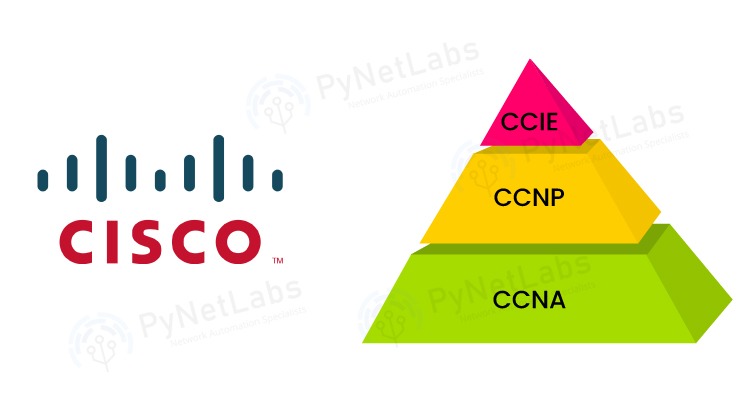
Difference between CCNA and CCNP
Feature CCNA CCNP Level Associate Professional Prerequisites None CCNA Training Skill Set Basic knowledge of networking and Cisco devices such as Routers, Switches, etc. Advanced level of configuring routers, switches, etc. Advanced knowledge of troubleshooting various networks. Network security, management, etc. Exam Module One exam Two Exams – 1 Core and 1 Concentration Exam Code 200-301 Various (Depends on the track of choice) Exam Cost USD 300 + Taxes USD 700 (400 + 300) + Taxes Jobs Available L1 Network Engineer, Help Desk Engineer, IT Admin, Technical Support Engineer, etc. L2 Network Engineer, Network Specialist, Network Manager, IT Manager, Network Analyst, etc. Salary Expectation 3 to 6 LPA 5 to 8 LPA Topics Covered in CCNA Training –
Topics Covered in CCNP Training –
Can I pass CCNP without CCNA?
Why CCNP Enterprise is the best CCNP track for all network engineers?
PyNet Labs for CCNP Routing and Switching
Frequently Asked Questions
Q1 – Is CCNP difficult to pass?
Q2 – Can I pass CCNP without CCNA?
Q3 – Is CCNP still in demand?
Q4 – Is CCNP enough to get a job?
Conclusion